Showing posts with label preservation. Show all posts

Saturday, October 13, 2012

Bridgeview Bank Uptown - Open House Chicago

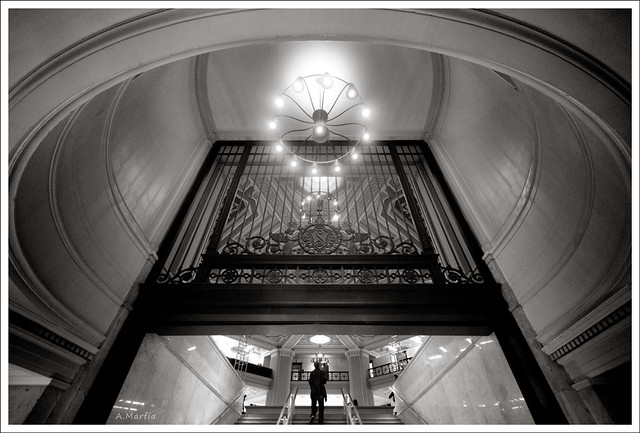
Bridgeview Bank, formally Uptown Bank, and originally built as the Sheridan Trust and Savings Bank Building in 1924, has long been one of my favorite buildings in Chicago's Uptown neighborhood.  I've captured it's exterior quite a few times, so I was excited when I learned that it was on the schedule for the Chicago Architecture Foundation's excellent Open House Chicago event.  Below are a sampling of photos from the interior, the first floor of the grand banking hall:

Uptown Bank Entrance
Nikon D7000 w/ Sigma 10-20mm lens, f4 at 1/125sec, ISO800. © Andy Marfia 2012 All Rights Reserved.
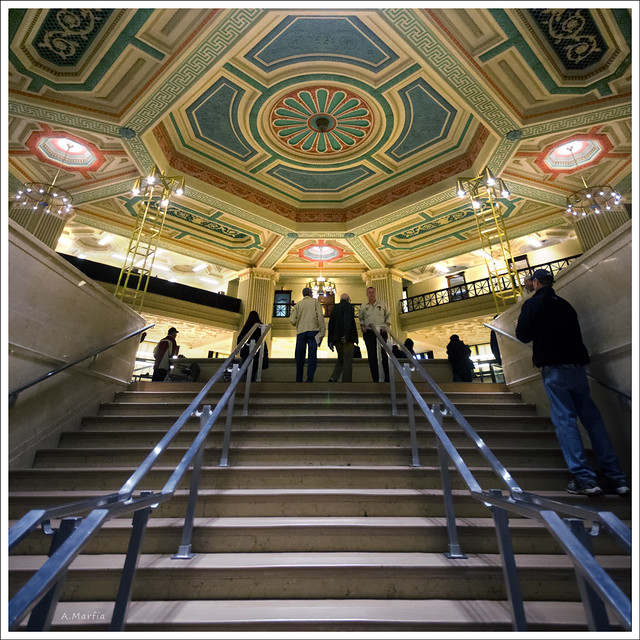
Ascent
Nikon D7000 w/ Sigma 10-20mm lens, f4 at 1/160sec, ISO800. © Andy Marfia 2012 All Rights Reserved.
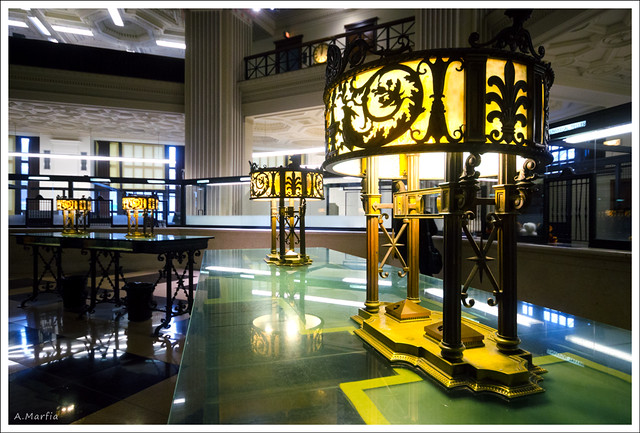
I'd like to make a deposit... in 1924.
Nikon D7000 w/ Sigma 10-20mm lens, f4.8 at 1/100sec, ISO800. © Andy Marfia 2012 All Rights Reserved.
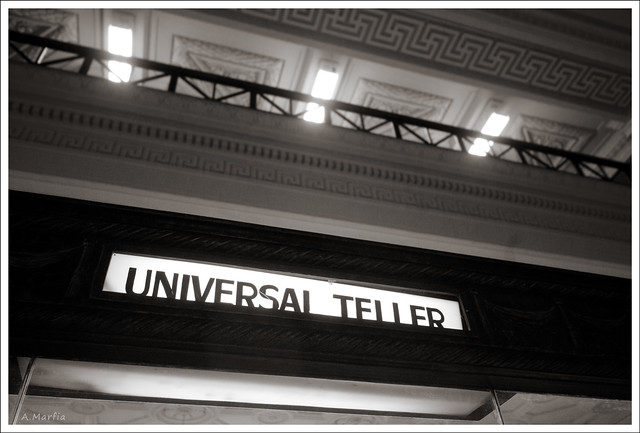
Universal
Nikon D7000 w/ Sigma 10-20mm lens, f5.6 at 1/60sec, ISO800. © Andy Marfia 2012 All Rights Reserved.

These last two photos are of the vault in the basement.  Both the banking hall and the vault were featured in the movie "Public Enemies," starring Johnny Depp as John Dillinger.  I never say it myself.

The Vault
Nikon D7000 w/ Sigma 10-20mm lens, f4.5 at 1/160sec, ISO1600. © Andy Marfia 2012 All Rights Reserved.

Buried Treasure
Nikon D7000 w/ 16-85mm lens, f4.5 at 1/25sec, ISO800. © Andy Marfia 2012 All Rights Reserved.

A programming note: I took a lot of photos at Open House Chicago (over 300 on Saturday alone), and I also have photos from last year that I simply never got around to processing.  I think the sanest way to handle these is to deal with them one location at a time.  So this week was the Uptown Bank... next week or the week after or whenever I have time, I'll tackle something else.  Stay tuned.

Friday, June 15, 2012

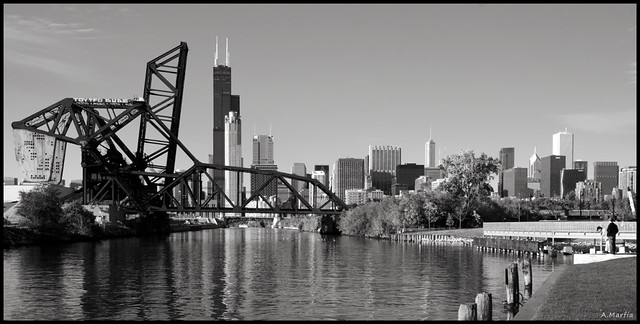
Photo of the Week: St. Charles Air Line Bridge eats Chicago

St. Charles Air Line Bridge eats Chicago
Nikon D7000 1/200sec at f10, ISO100. Copyright Andy Marfia 2012 All Rights Reserved.

I'm a big proponent of revisiting photos, both in the darkroom, and by going back to locations in real life.  I find that some of my best images come from second or third attempts.  This week's photo, of the St Charles Air Line Bridge as seen from Ping Tom Park in Chicago's China Town, is similar to one that I shot last year but was never completely satisfied with.  With this version, I chose a wider crop and processed in black and white, and I think I finally got it right.

About the bridge: The St Charles Air Line Bridge was named a Chicago landmark in 2007.  It was the world's longest and heaviest single-leaf bridge when completed in 1919.  Interestingly, while most people view this as one bridge, there are actually two in this photo, sitting side by side.  The lowered Bridge is the St Charles Air Line, while the raised one is the Chicago Terminal Bridge.  The latter is no longer in use and sits permanently raised.

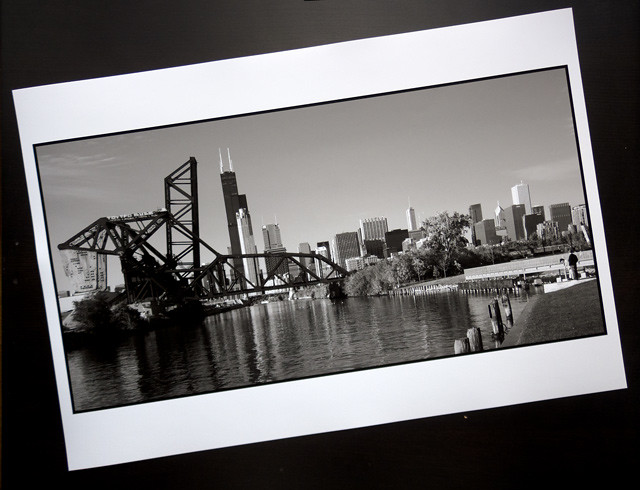
Prints: I recently used this as a submission for a photo contest sponsored by Preservation Chicago, and as a result, I have a few extra prints lying around which are for sale if anyone is interested:

IMG_3850

Shoot me an email for info on pricing.  They measure exactly 9x18 inches on 13x19 Epson Premium Semigloss paper.  I can also print other sizes as requested.

Thursday, July 21, 2011

Loyola Alumni Gym Follow Up

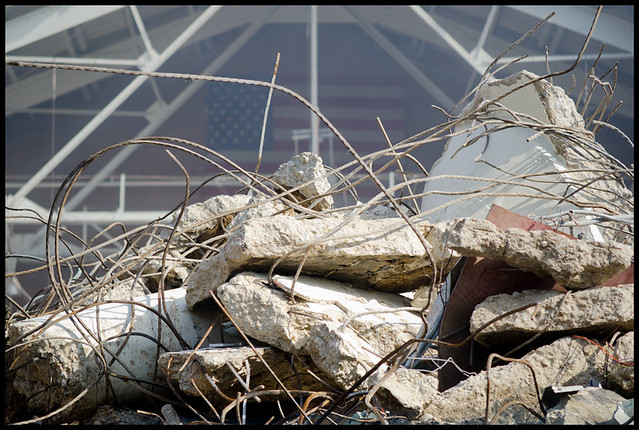
Past and Present
Nikon D7000 w/ 55-200mm lens, 1/400sec at f6.3, ISO200. Copyright 2011 Andy Marfia, All Rights Reserved.

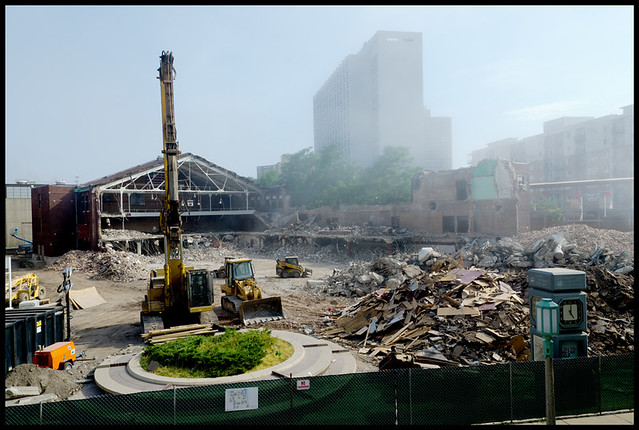
I blogged back in May about how Loyola University was planning to demolish their historic Alumni Gym.  Not surprisingly, they've gone ahead with their plan, and I stopped by this week to take a few photos of the demolition.  The photo above shows the south wall of the building (still holding an American flag) through the pile of rubble.  Here's an overview:

Demo in Progress - Loyola Alumni Gym
Nikon D7000 w/ 16-85mm lens, 1/250sec at f8, ISO200. Copyright 2011 Andy Marfia, All Rights Reserved.

Leaving aside the architectural merits of this building, what I'm most struck by looking at this scene is just how wasteful it is to tear down a large structure.  The amount of energy used, raw material discarded and landfill space consumed-- is that really outweighed by whatever benefit is gained from a new building?  Certainly there are times when tearing something down makes sense, but I think as a society, if we truly care about things like environmental sustainability, our default first option should always be to adapt and reuse.

Friday, July 15, 2011

Garfield Park Conservatory Hail Damage

The Garfield Park Conservatory, a Chicago landmark on the West Side, was hit by golf ball sized hail on June 30th, which left the roofs of three of its houses severely damaged, and all 9 of its production houses.  I took these photos the week after the incident:


Amazing, the Conservatory is open to the public, but only 3 of the 7 display houses are currently accessible in addition to the outdoor gardens.  The 103 year old building is truly one of the unsung gems of Chicago.  My father used to take us here when we were kids, and I have fond memories of running through its maze like interior.  To a five year old, this place is massive.

Currently the Conservatory is accepting donations on its web site to help with the repairs.  As of this writing, they still don't know the exact cost, timeline, or to what extent insurance will help pay for the damage.

Friday, May 27, 2011

Loyola Alumni Gym Demolition

What's the deal with major Universities in Chicago these days?  First, there's Northwestern's plan to demolish Prentice Women's Hospital, which is being vigorously fought by architects and preservation groups.  Then, just this week I learned that Loyola is beginning demolition of their Alumni Gym.  The gym is being torn down to make way for a new student union.

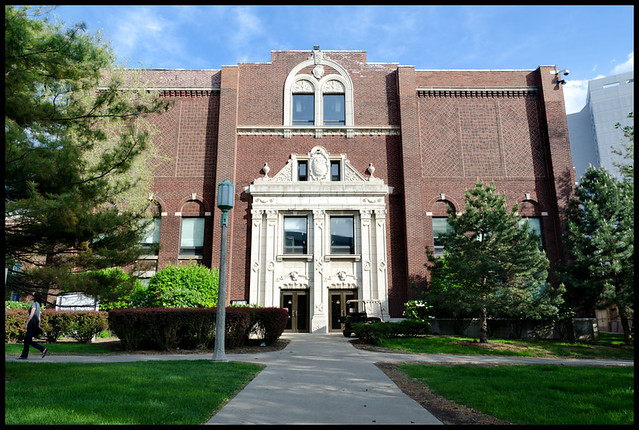
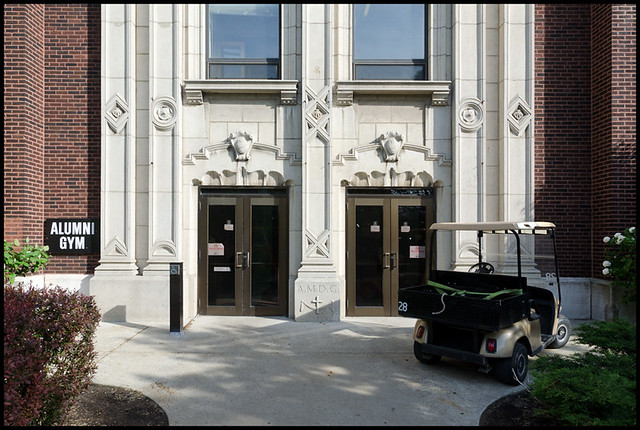
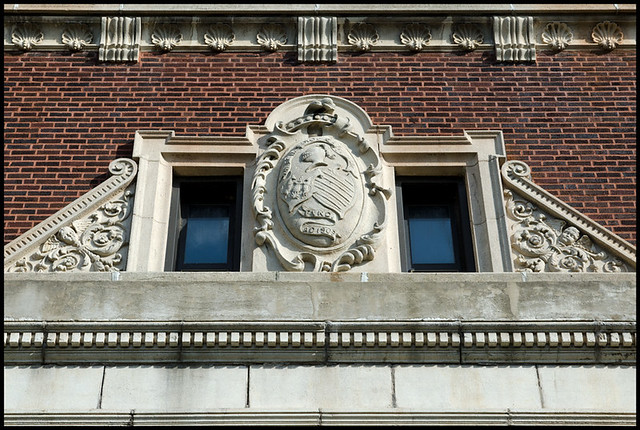
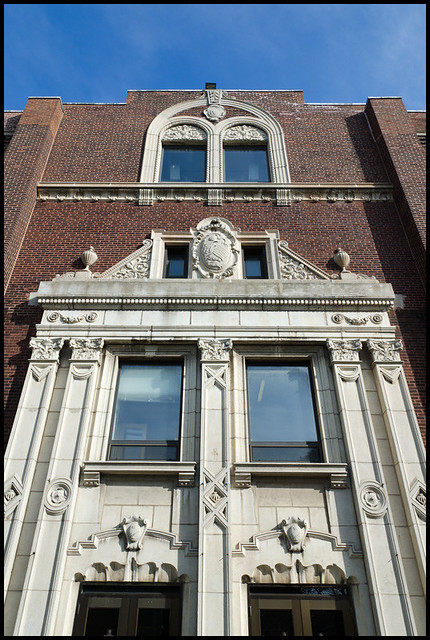
Alumni Gym may not be as architecturally significant as Prentice, and as far as I know, no one is protesting this-- yet it's a lovely building nonetheless.  Built in 1923 and home to the 1963 NCAA Mens Basketball Championship team (an interesting story on racial integration), it features some beautiful terracotta and looks to be a perfectly sound structure.  I understand the University has built new athletic facilities, but surely this could have been adapted for some other use?

I'm not a Loyola student or alumni, but friends who graduated from the University tell me that they barely recognize the campus anymore.  Alumni Gym is just the latest victim of Loyola's plan to remake their campus into some modern image.  It's really a shame, because I'm sure whatever shiny new building they erect in its place will be perfectly nice and functional, but it will never be the home to a National Championship team.  No amount of glass and concrete can build school history like that.

Anyway, some photos.  These were all taken on Monday, May 23rd, 2011.

Update July 2011 - this building has been torn down.

Loyola Alumni Gym
Nikon D7000 w/ 16-85mm lens, 1/200sec at f8, ISO200. Copyright 2011 Andy Marfia, All Rights Reserved.

DSC_4304
Nikon D7000 w/ 16-85mm lens, 1/320sec at f8, ISO200. Copyright 2011 Andy Marfia, All Rights Reserved.

DSC_4307
Nikon D7000 w/ 16-85mm lens, 1/500sec at f8, ISO200. Copyright 2011 Andy Marfia, All Rights Reserved.

DSC_4306
Nikon D7000 w/ 16-85mm lens, 1/500sec at f8, ISO200. Copyright 2011 Andy Marfia, All Rights Reserved.

DSC_4318
Nikon D7000 w/ 16-85mm lens, 1/250sec at f8, ISO200. Copyright 2011 Andy Marfia, All Rights Reserved.

In this last photo, you can see that demolition had begun in the rear:

DSC_4325
Nikon D7000 w/ 16-85mm lens, 1/50sec at f8, ISO200. Copyright 2011 Andy Marfia, All Rights Reserved.

Monday, October 4, 2010

Good grief: Frank Lloyd Wright's Unity Temple vandalized

In one of the more ridiculous cases of theft or vandalism that I can remember, someone has stolen the copper lettering from Frank Lloyd Wright's historic Unity Temple in Oak Park.  This happened in the wee hours of the night between September 28th and 29th.  Who did it, I wonder?  A super sleuth team of architectural ninjas reselling artifacts on the black market?  No, based on an article in the Oak Park Journal, it was likely just someone looking for scrap.  I mean, I know times are tough and all, but seriously?  Scrap metal?

UnityTemple
Photo by Yo Hibino via flickr.  Note: the lettering is still in place in this photo.

The congregation has yet to decide how best to replace the lettering or what the cost will be.  According to the article: "there's the question of what to restore them with. Should they bring back the original bronze, or replace them with a material that looks good, but is perhaps less appealing to criminals?"

I have an idea-- bring back the original bronze but also install a security camera somewhere near the property.  It's sad such a tactic is necessary for a house of worship, but sometimes you just have to do what you have to do.

More information about the Unity Temple can be found on the congregation's web site or the all knowing Wikipedia.

Wednesday, March 31, 2010

Andersonville named to National Register of Historic Places

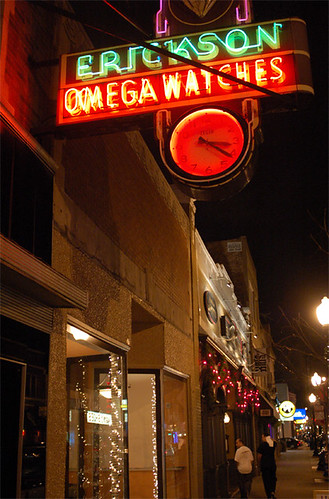
Erickson 1

The "Andersonville Commercial District" has been named to the National Register of Historic Places, according to Chicago Breaking News:

"The Andersonville Commercial Historic District runs from the 4900 block to the 5800 block of North Clark Street.  It's closely associated with the Far North Side's Swedish community, which moved there after the 1871 Chicago fire.  The district includes fully intact turn-of-the-century commercial buildings that represent the popular architectural styles of the time, the preservation agency says."

Nice!  I live in Andersonville, so I appreciate the, er, appreciation for my neighborhood.  For those not good with numbers, 4900 to 5800 is roughly Argyle to Hollywood, so this encompasses parts of Uptown, Andersonville and Edgewater.

The National Register has also added the IBM Building at 330 N. Wabash.  Okay, I understand it was designed by Mies van der Rohe, and everyone thinks Mies van der Rohe is the bee's knees these days... but, isn't that pretty much the exact same building as the Seagrams Building in New York City?

Photo Details: Nikon D50 with 28mm lens, 1/60sec at f2.8, ISO1600.  This is Clark Street circa 2005.  This jewelry store recently closed and is currently sitting vacant. 

Wednesday, March 3, 2010

Cook County Hospital Preserved

The Cook County board has justifiably received a lot of criticism in recent years, most notably in 2008 for raising the sales tax, giving Chicago the highest sales tax of any major city in the country.  One thing that I won't criticize them for is this-- On Tuesday, they voted unanimously to preserve the old Cook County Hospital building, approving $108 million in funding to adaptively rehab and convert the building into medical offices.  This is fantastic news.  The old hospital (which faces Harrison Street) is a real gem.  It's both architecturally and historically significant, not to mention being a bit of a pop culture icon (it was the basis for the television show ER and featured prominently in the movie The Fugitive).

Cook County Hospital

For those unfamiliar with the Cook County saga, the building has been vacant since 2002, when John H. Stroger Hospital replaced it.  Old man Stroger (then county board President) tried to tear it down at the time, but was prevented from doing so after a public outcry from preservation groups and other members of the county board objected.  Since 2002, large sections of the hospital have seen the wrecking ball-- notably the rear wings, Children's Hospital, and power plant-- but the original 1913 building has been spared.  Now that the county has approved the funds to pay for its rehab, it finally appears to be safe.

Now, I'm not someone who believes that every single building should be saved, and I'm sure some will think this is a waste of money.  The County plans to pay for this, in part, with Tax Increment Financing (TIF) dollars, which isn't magic money-- it ultimately comes out of our pocket books.  That said, this is worth the cost.  If you can't get behind saving Cook County Hospital, then you really can't get behind saving anything.

entrance

Photo Notes: Both photos were taken with a Nikon D50 and 18-70mm lens in 2008.

Further Reading: Blair Kamin at the Chicago Tribune has a nice series of blog posts on this topic.

Tuesday, September 1, 2009

The Purple Hotel

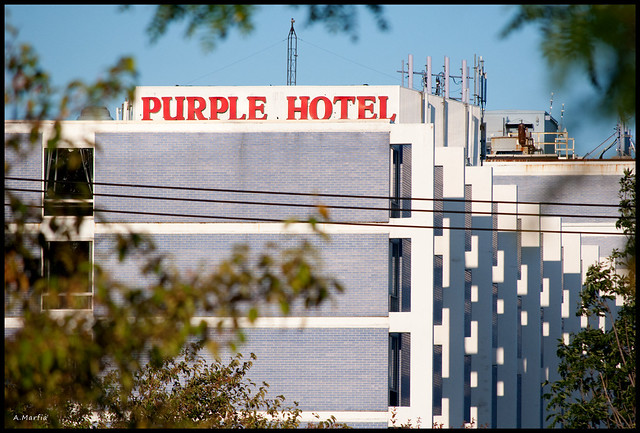
Purple Hotel

The Purple Hotel, on Touhy and Lincoln in Lincolnwood IL.  It's been closed since 2007 and probably would have been torn down by now if not for the collapse of the real estate market.  It's famous for a couple of reasons that have nothing to do with its unusual color.  It was the site of a mob hit in 1983 when Allen Dorfman was fatally shot seven times in the parking lot.  More recently, Stuart Levine (testifying in the Tony Rezko trial) claimed that he had participated in daylong drug parties at the hotel.  Fun times!

Depending on your taste, this is either a good or a bad example of 1960s modernism, but I rather like this building and find the purple facade strangely fascinating.  I drive by here periodically and finally decided to stop and take a few photos.

Purple People Eater

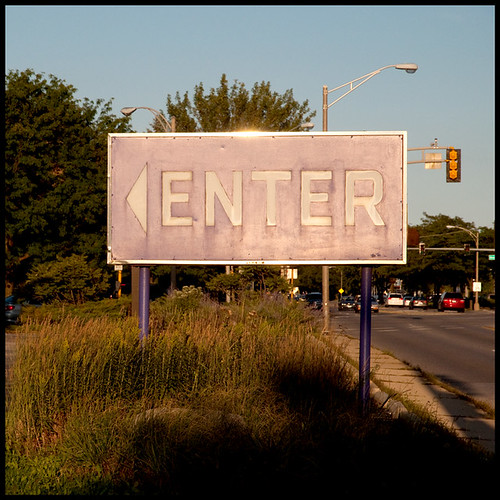
< ENTER

I used a Nikon D90 for all of these, with a Nikon 55-200mm lens for the first photo (zoomed to 200mm), and a 16-85mm lens for the second two.  I corrected a touch of barrel distortion in the second photo and also (mostly) straightened the perspective via Photoshop.  The third photo was, obviously, cropped square.

Saturday, January 31, 2009

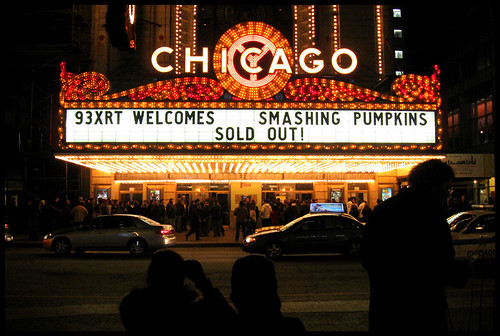
Chicago's landmark ordinance struck down by appellete court

IMG_0341

(Crain's) — An Illinois appellate court has struck down the city of Chicago’s landmarks ordinance, saying it is unconstitutionally vague, putting in jeopardy the city’s protection of more than 250 buildings and 50 historic districts.

(Source: Crain's Chicago Business)

Needless to say, this is a good day for developers and a very bad day for preservationists, though the ultimate outcome of this ruling remains unclear.  It appears the law will stay in place at least until the case is over-- it now goes back to the lower court-- and the Daley administration says it will consider appealing to the State Supreme Court.  I hope they do.

For further reading, Lynn Becker at Architecture Plus and Blair Kamin at the Tribune have both written interesting posts on this topic.

Note on the photo: The Chicago Theater, built in 1921, is one of the many buildings currently with landmark status under the Chicago Landmark Ordinance.  Canon A590, 1/60sec, f3.5, ISO200.

Wednesday, May 7, 2008

Cook County Hospital

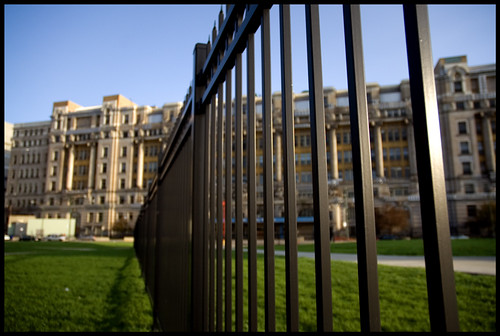
Cook County Hospital

The old Cook County Hospital building, dating to 1913-16, as seen from the park on the other side of Harrison, through the fenced off helo pad area.  This front section of the hospital is being restored for eventual office space; the rear wings and everything else in the back is slowly coming down.  This has been a popular building to photograph since they started demolition work over the winter.

Now, you may ask, why photograph this through a fence?  To which I would reply, why not? 

Nikon D50, 18-70mm lens, 1/1250sec at f3.5.

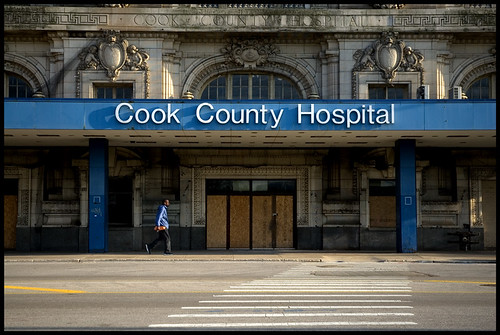
Cook County Hospital #2

The boarded up main entrance, which is facing north.  In Chicago it can be difficult to photograph north facing buildings with the sun hitting them directly.  I believe this happens only during the spring and summer months, and even then, only around sunrise and sunset, when the sun is hanging low in the sky.

Nikon D50, 18-70mm lens, 1/400sec at f5.

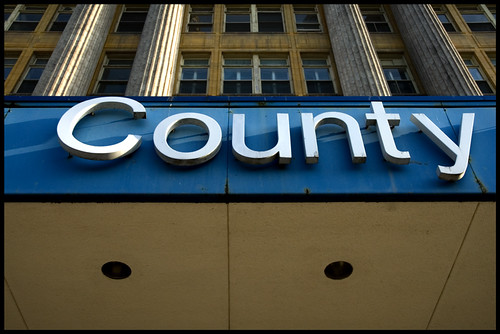
County

Known to many simply as County, Cook County Hospital was the inspiration for the TV show, ER, which called its hospital "County General".

Nikon D50, 18-70mm lens, 1/640sec at f5.

Tuesday, March 25, 2008

Coyote Building triptych

sign city

North Ave reflection

untitled

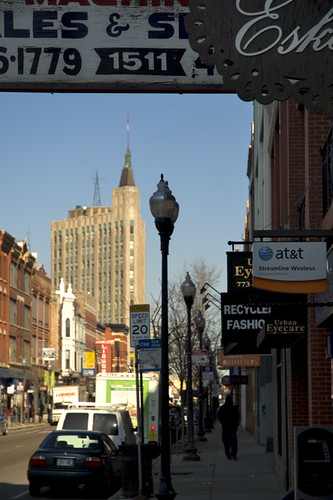
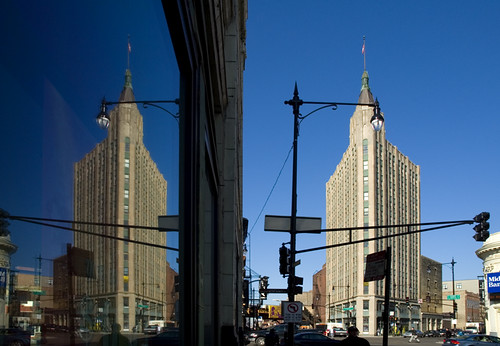
A triptych of photos featuring the Coyote Building at the intersection of Milwaukee, North, and Damen Avenues.  This area is soon to be named a landmark district.  I have to admit that I have no idea how or why this building came to be known as the "Coyote Building" but I've heard enough people call it that to assume it's the correct name. 

1st photo: Nikon D50 with 18-70mm lens, 1/400sec at f5.6.  I was looking north on Milwaukee Ave. in this shot.

2nd photo: Nikon D50 with 18-70mm lens, 1/200sec at f13.  Vertical lines corrected via Photoshop.  I was looking west on North Ave in this shot.

3rd photo: Nikon D50 with 50mm lens, 1/4000sec at f1.8.

Saturday, January 19, 2008

Apache Motel

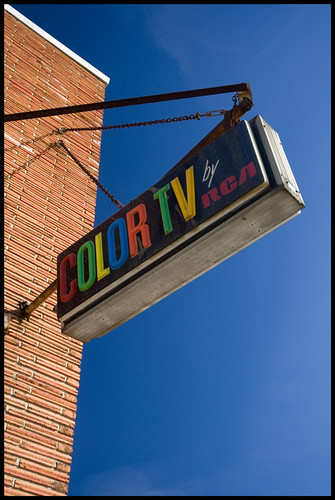
color tv

Don't be fooled by the bright, vibrant colors in this photo.  It was cold on this day, very, very cold.  This sign is part of the Apache Motel, one of the few remaining Motels on north Lincoln Ave. in Chicago.

Check out this Gapers Block article for more information on the Lincoln Ave. Motels.

Nikon D50 w/ 18-70mm lens and polarizing filter. 1/200sec at f5.

Tuesday, November 6, 2007

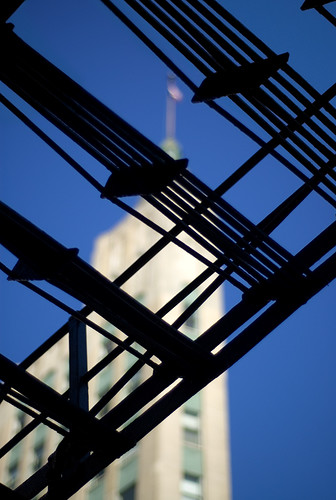
Uptown Bank Building

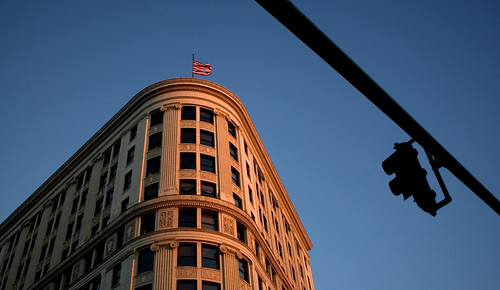
Uptown Bank Building #2

Easily one of my favorite buildings in Uptown, if not the entire city, the Uptown Bank Building (currently the home of Bridgeview Bank) was completed in 1924.

You can see it from a different angle here.

Nikon D50 with 24mm nikkor set at f2.8. (I really wanted the streetlight to be out of focus, but only mildly succeeded).